
You got laid off. That's not the whole story.
Free story sessions for people who've lost a job. In three conversations, one-on-one or in a small group, we'll make sense of what happened, so you can choose what comes next instead of just reacting to it.
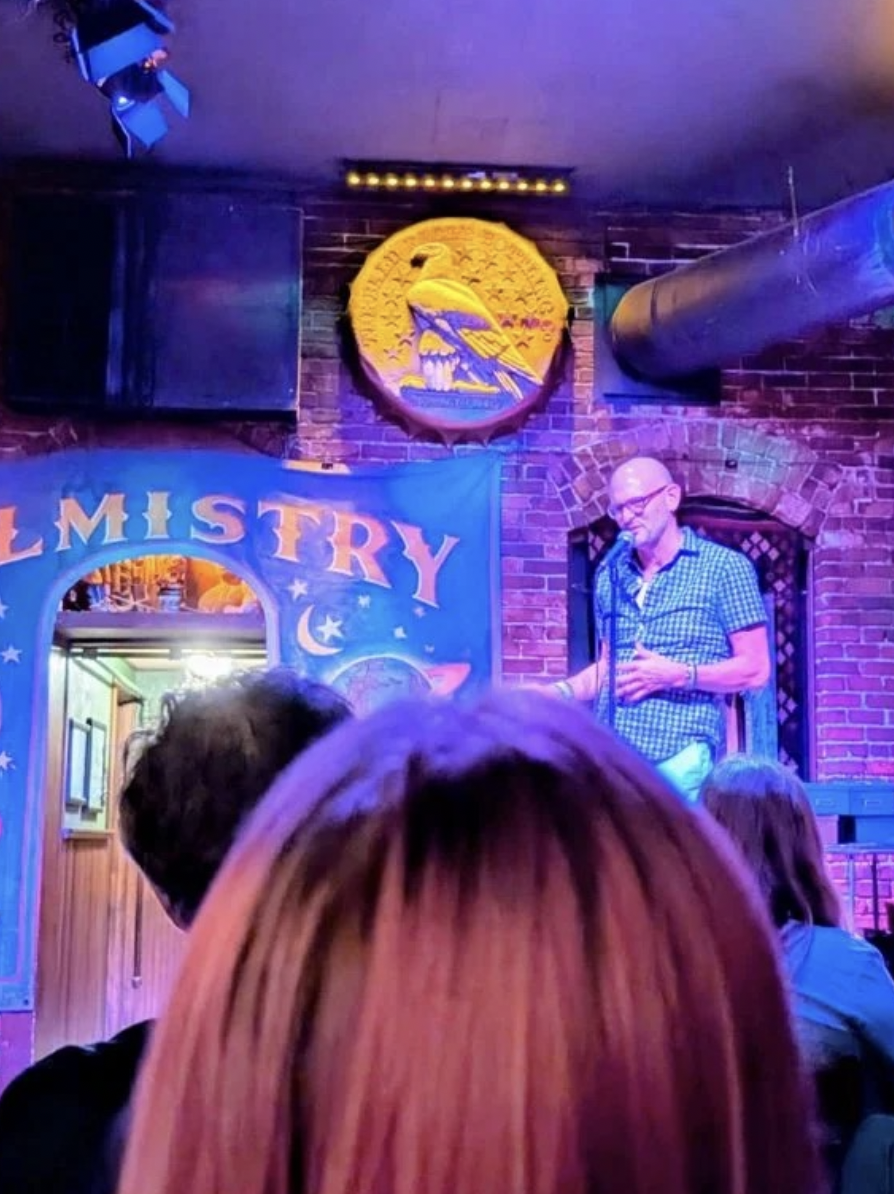
A layoff hands you a story you didn't write
It often sounds like "I wasn't good enough" or "I'm starting over from nothing." Left alone, that story shapes how you interview, how you network, and how you feel at 2 a.m. Something about it doesn't sit right, and that unsteadiness won't settle until you look at it.
Transitions is for you if:
- You were laid off recently, or a layoff from years ago still stays with you, in any field or role
- You keep replaying how it happened, or you can't quite talk about it yet
- You've updated your resume, but you don't know how to explain the gap, or yourself
- You feel stuck between who you were at work and who you might be next
You don't need to be a writer. You just need to be willing to talk.
Your guide

I'm Chris Sullivan. I spent twenty-five years in software, through reorganizations and job changes. Before that, I earned MFAs in poetry and fiction and taught college writing. When a hard stretch during the pandemic took me away from my job, story is what helped me find my footing. Now I help others do the same.
What people say
"Chris showed me what's important about my story, and that gave me confidence. He gave me a voice."
Workshop participant
"He asked me specific questions that got me talking, and the words were just flowing."
Workshop participant
"Chris is never judgmental. He just guides you."
Workshop participant
Why story works
The layoff is where this chapter starts, not how it ends. Afterward, the old picture of yourself can keep you circling, trying the same moves and getting the same results. Then, often in the middle of the struggle, a new truth about you starts to come through. Once you accept it, you begin moving toward a new you.
Working with a story is how people turn an ending into a turning point. We don't pretend it didn't hurt. We look at it clearly, find what it taught you, and build the throughline from where you were to where you're going.
Research backs this up. In a study of laid-off professionals, those who wrote about what the job loss meant to them found new jobs faster. They didn't get more interviews; they did better in the ones they got.1 Other research suggests people improve as their stories change, especially as they shift from "this happened to me" to "here's what I chose next."2
How it works
1. Book a time. Pick a one-on-one slot on my calendar, or ask to join a small group. It's free during the pilot.
2. Tell the story, then make sense of it. Over three sessions, you tell what happened in your own words, with no pressure to make it neat. Then we look at how you responded, why it hit the way it did, and what it says about what you value.
3. Leave with your story. You walk away with a clearer story about yourself, one you can use in interviews, on LinkedIn, and with the people you love.
What you leave with
You leave steadier than you came in: clearer about who you are, how you stand with others, and where you're going next. The unsteadiness settles because the story finally holds.
- A short, honest version of your story you can say out loud without flinching
- A clearer sense of what you want from your next role, or your next chapter
- A way to talk about the gap that sounds like you, not like an apology
Format
- One-on-one: three video sessions of about 45 minutes.
- Small group: three video sessions of 75–90 minutes. Groups work for a reason: in one well-known study, hearing how others got through a hard transition, then putting your own experience into words, helped students thrive for years afterward.3
- Confidential: in one-on-one sessions, what you share stays between us. In groups, everyone agrees to keep what's shared in the room.
Questions
Is this therapy? No. It's a guided story conversation. If something comes up that needs a counselor, I'll say so and help you find support.
Is this career coaching? Not exactly. We won't polish your resume. We'll work on the story underneath it, which tends to make everything else easier.
Why is it free? I'm piloting Transitions now, and I'm building it into a program companies can offer employees going through layoffs. Your honest feedback helps shape it. Nothing you share in sessions goes to any company, and testimonials are used only with your permission.
Should I choose one-on-one or a group? Whichever feels right. One-on-one gives you more time on your own story. A group lets you hear from people going through the same thing, which many find a relief.
What if I'm not ready to talk about it? That's common. We go at your pace.
Your next chapter starts with the story you tell about this one.
1. Spera, Buhrfeind & Pennebaker, Academy of Management Journal (1994). 2. Adler, Journal of Personality and Social Psychology (2012). 3. Walton & Cohen, Science (2011).