How story works, and how it works on us.
Every story, including yours, moves in a shape. These are the models I use to help people find the shape of a hard chapter and the throughline that carries them out of it. They draw on what psychologists call narrative identity: research showing that the stories we tell about hard experiences shape how we grow from them. You don't need to understand the models to start. They're here for the curious.
1. From mess to shape
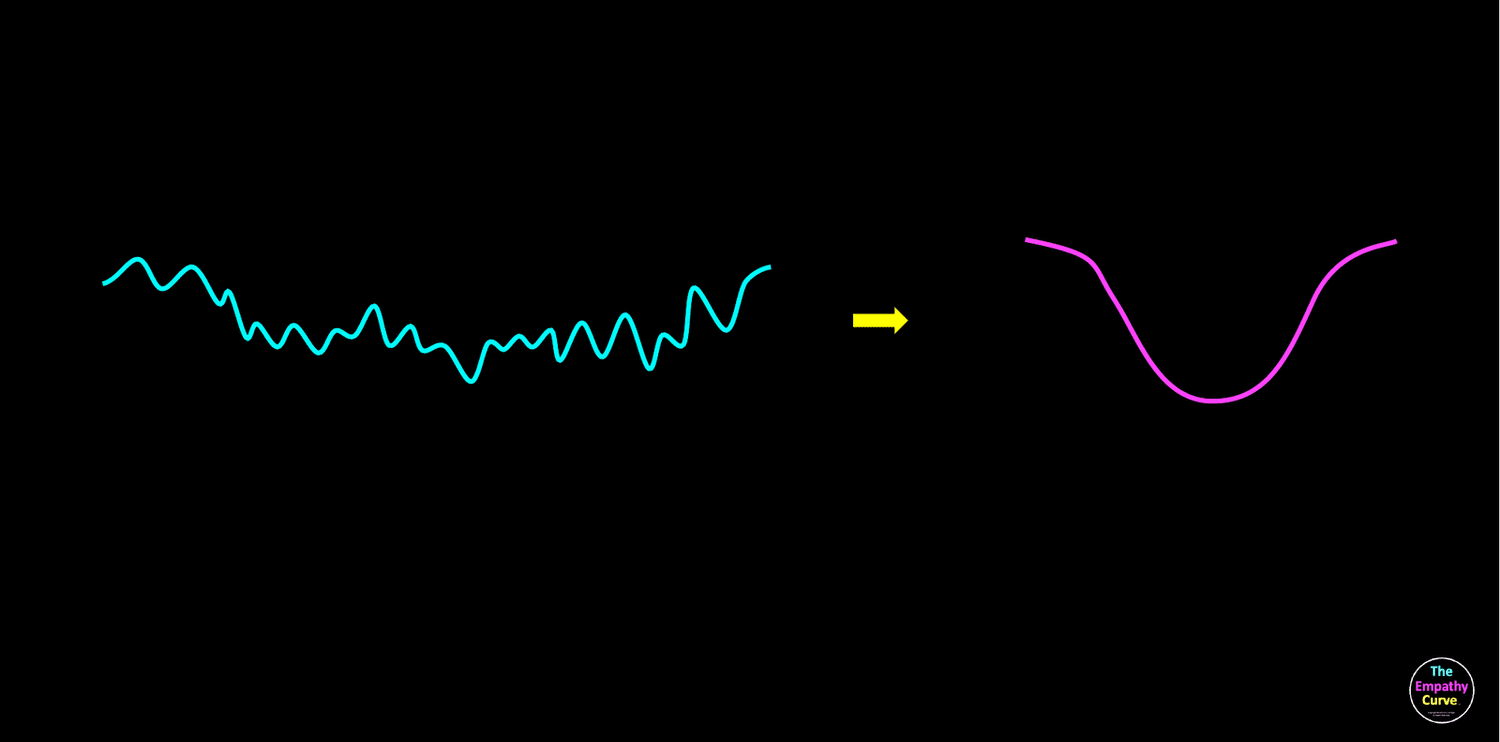
Life doesn't arrive as a story. It arrives as a jumble of good days and bad ones. Over time, we smooth and compress that jumble into a shape we can carry. Story work helps you do that on purpose, so the shape you carry forward is true and useful, not just the one you were handed.
2. The five change points
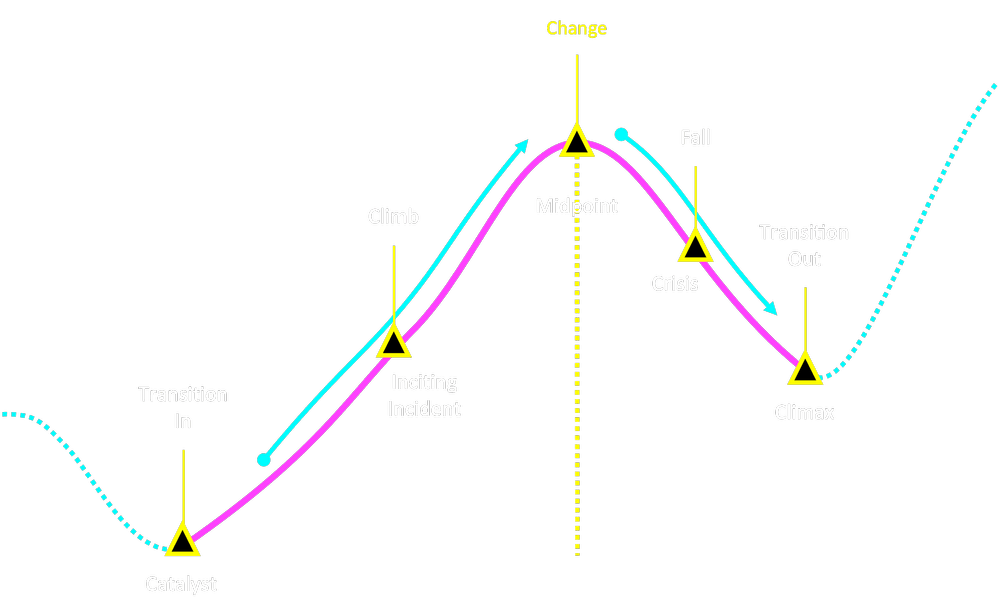
Most stories, and most life changes, turn at five points. A catalyst disrupts the life we expected. We try to hold on to what we knew. At the midpoint, a new truth appears. In the crisis, we decide whether to adapt to it. The climax shows what we chose. Knowing where you are on the curve makes it easier to keep going.
3. The Empathy Curve
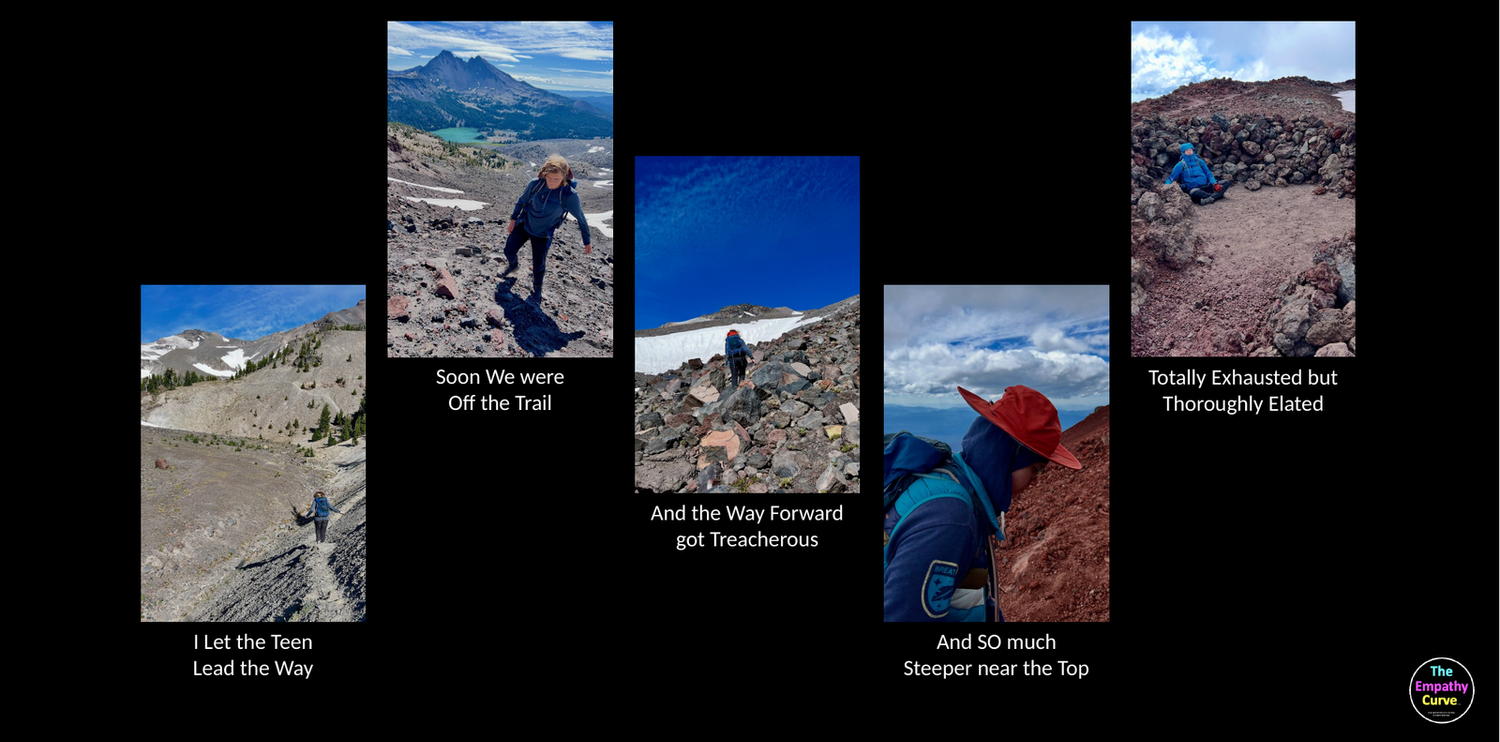
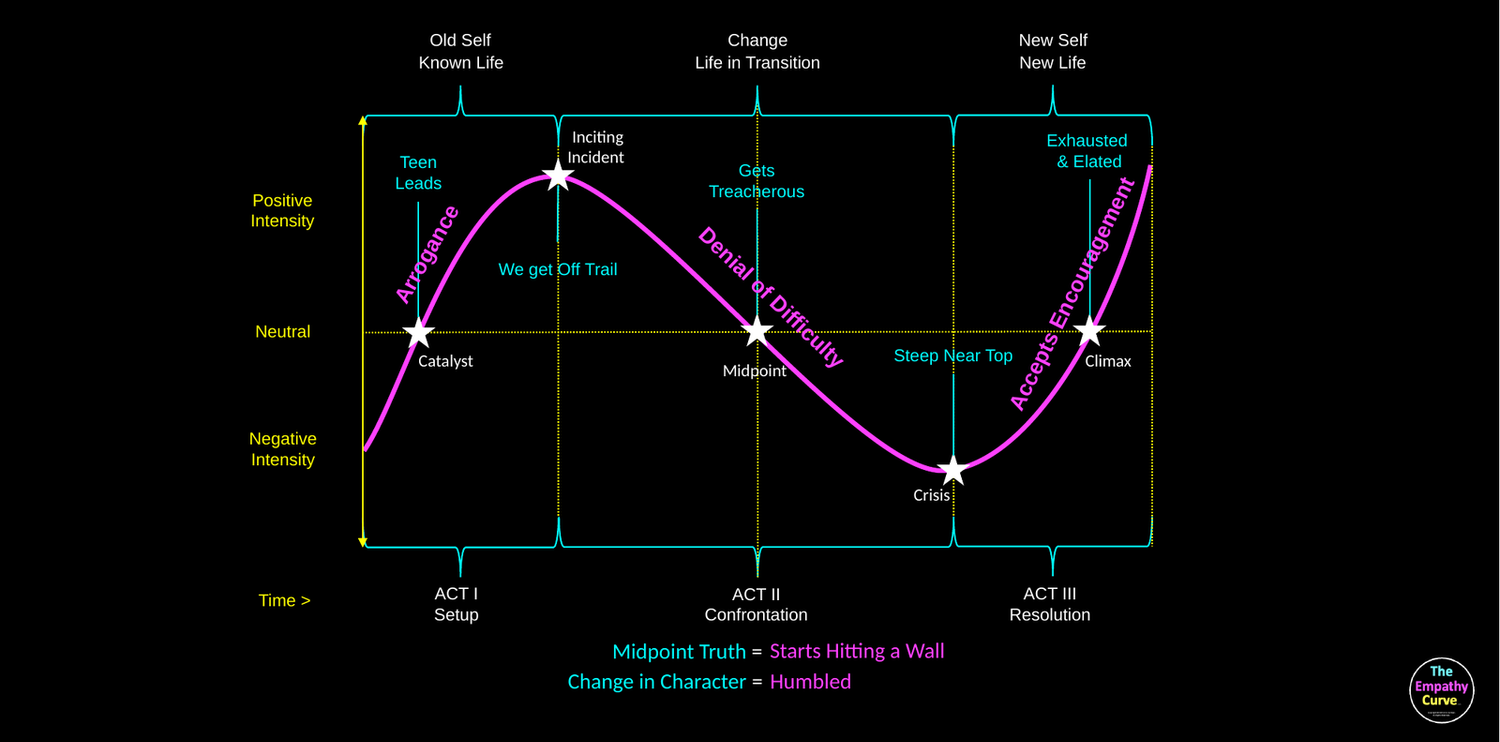
This is the curve the site is named for. It maps how a story feels from the inside: the known life we start with, the low point, and who we become on the other side. Here it's filled in with a real story. On a climb, my teenager insisted on leading, we lost the trail, and the way kept getting steeper. The turn came after hitting a wall and accepting encouragement. We reached the top exhausted, elated and, for one of us, humbled.
4. The midpoint truth
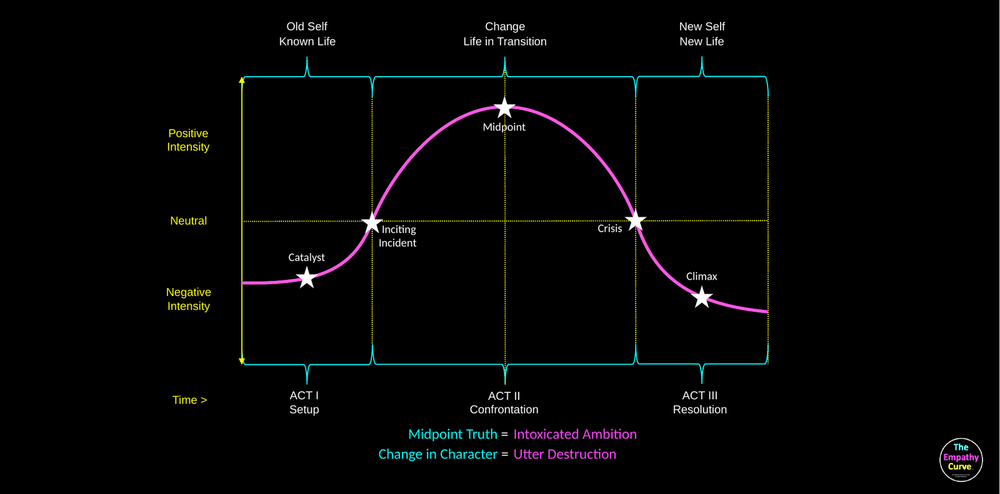
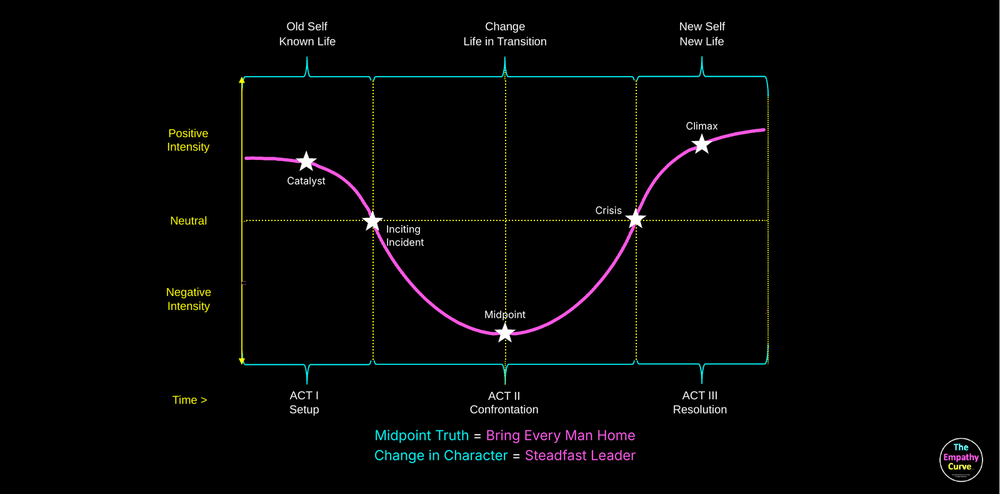
Two stories can start with the same ambition and end in very different places. What changes the ending is the truth a person takes from the middle. Icarus rose on borrowed wings, and the truth he took at the top, that he could fly higher still, sent him into the sea. When pack ice crushed Ernest Shackleton's ship and his Antarctic expedition failed, he took a different truth from the low point: bring every man home. All 28 survived. In a hard chapter like a layoff, the middle is usually the low point, and that's where this truth gets decided. It's worth slowing down there.
5. Your Why guides your How
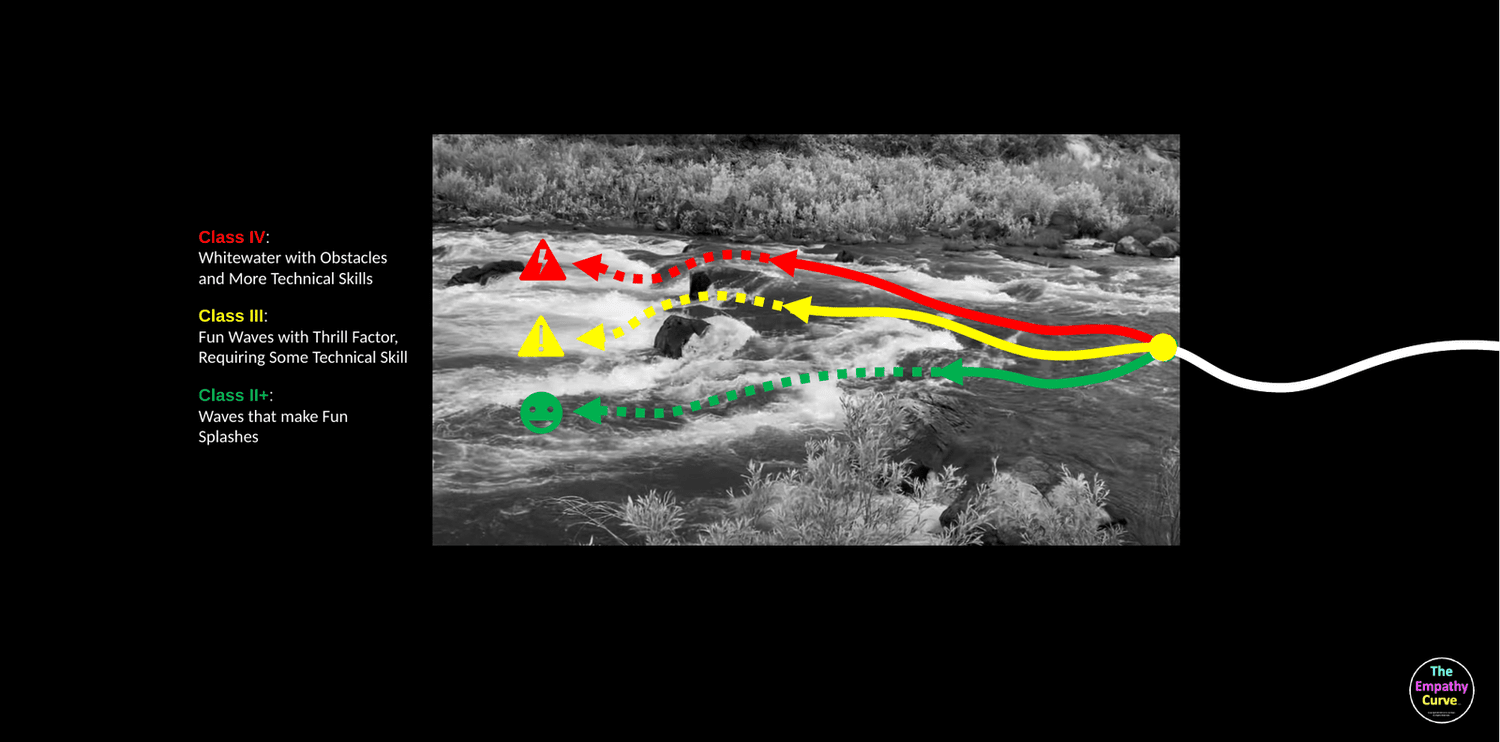
On a river, you choose your line before the rapid, then adjust stroke by stroke. Story works the same way. Your Why, what you need and value, chooses the line. Your How, what you actually do, carries you through it. When the How runs ahead of the Why, we end up somewhere we didn't mean to go. The throughline is the Why you follow from start to finish.
Photo: the John Day River, Oregon, by Chris Sullivan.
6. The Rings of Growth
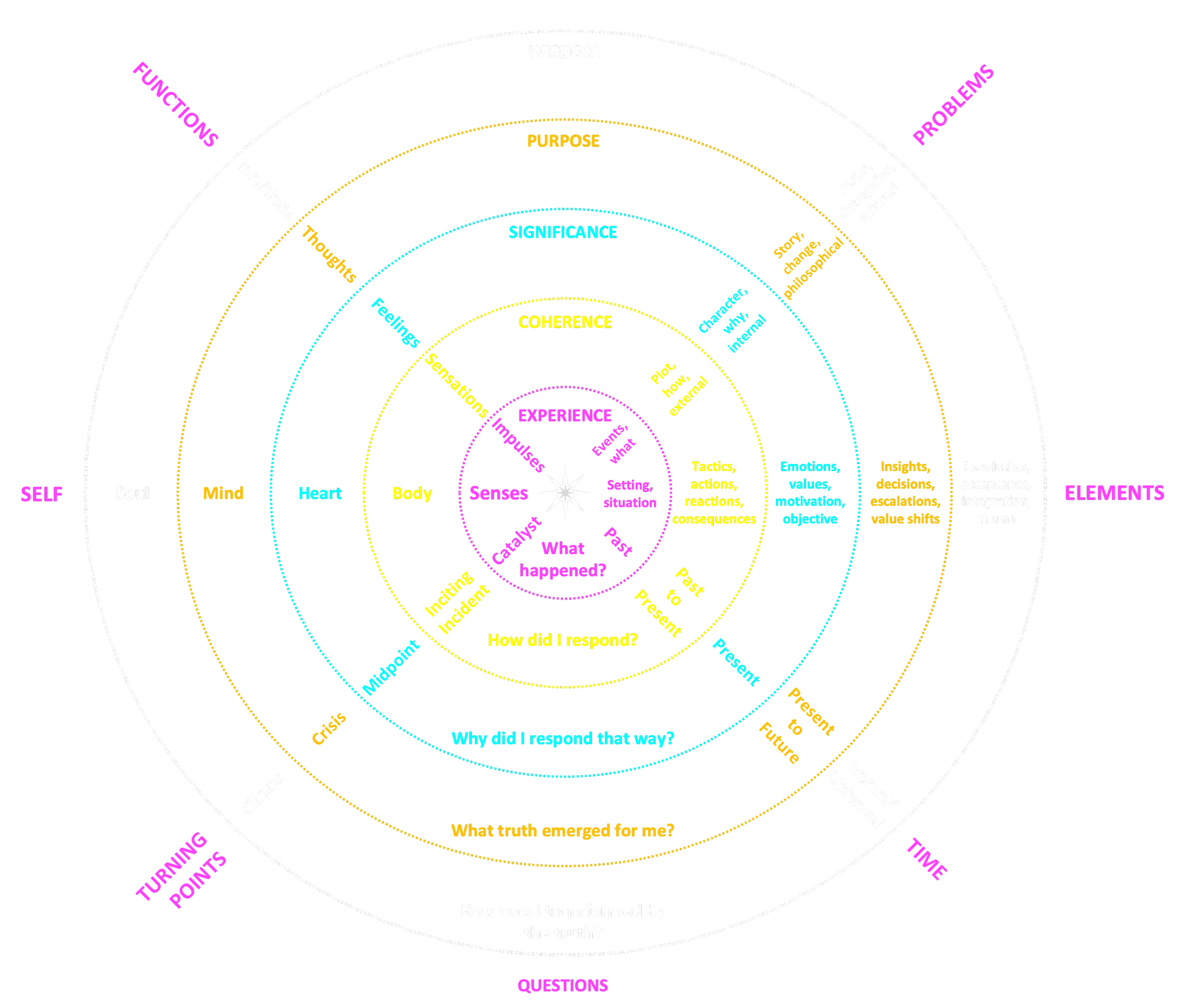
Meaning grows in layers, like the rings of a tree. Each ring asks a deeper question about what happened: what happened, how we responded, why, what truth emerged, and how it changed us. The outer rings hold the inner ones, the way a tree grows around its hard years. Each ring also lines up with a turning point in the story, from the catalyst at the center to the climax at the edge.